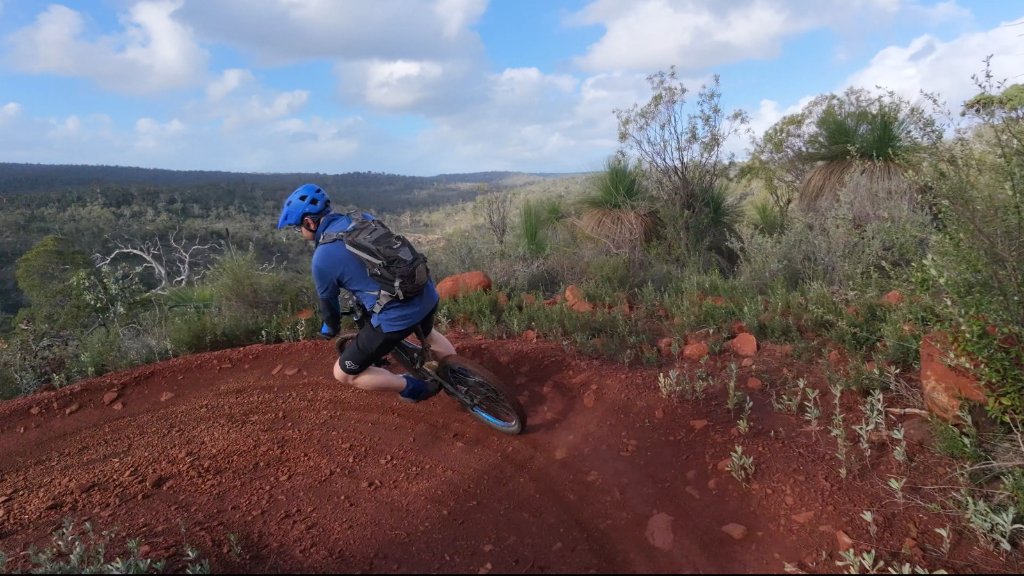
David enjoying his own form of Play.
Some forms of recovery look exactly as we expect them to.
An early night. A quiet afternoon. Sitting somewhere peaceful with nowhere else to be.
Other forms look like riding a mountain bike through the Pilbara at ten o'clock at night, when it is still 38 degrees outside.
That was one of the ideas that stayed with me after my conversation with David Kennington.
David has spent more than thirty years working in Western Australia's mining and resources industry. As a fitter, machinist and maintenance planner, much of his career has involved noticing small changes before they become expensive failures.
A different noise. A change in performance. A warning light suggesting that something in the system needs attention.
The question that kept circling for me was whether we are as willing to notice those changes in ourselves.
The Warning Lights We Ignore
David did not immediately describe his experience as burnout.
He spoke more about fatigue, something mining companies had trained him to recognise because of the long shifts, physical work, travel and extreme conditions involved.
One of his clearest warning signs arrived while he was driving home after an early start.
David had been waking at three in the morning to reach a gold mine in time for a six o'clock shift. During one drive, a kangaroo hit the side of his car. The sudden bang shocked him into full awareness, and he realised that although he had technically been controlling the vehicle, he had not been fully present.
Another day, he became so tired that he pulled into a parking bay, left the air conditioning running and closed his eyes. He intended to rest briefly and woke half an hour later, surprised by how deeply he had fallen asleep.
Later, while working a demanding roster in the Pilbara, he noticed a more gradual pattern. By around October each year, he was exhausted. No amount of coffee seemed to touch it, so he began deliberately booking time away from work.
You think you're okay, you think you're okay, and you're still exhausted, and you're like, yeah, something's not right.
That line stayed with me because warning signs are not always dramatic.
Sometimes nothing has technically broken. You are still arriving, working, answering questions and doing what needs to be done.
The system is still operating.
It is simply taking more and more from you to keep it running.
A warning light does not mean the whole machine has failed. It means something needs attention before it does.
Does the Label Matter?
We can spend a lot of time trying to decide whether what we are experiencing is burnout, fatigue, stress, exhaustion or something else entirely.
The right language can be useful, especially when it helps us find the right support. But sometimes the debate over the label distracts us from the most important piece of information:
Something has changed.
You are no longer recovering properly. The coffee is not helping. The weekend is not enough. Your concentration has shifted. Your patience is thinner. You feel less present inside the life you are trying to maintain.
Whatever you call it, that change is information.
The invitation is not to wait until everything falls apart before deciding it matters.
What If Recovery Does Not Look Restful?
When I asked David what helped him manage the pressure and fatigue, his answer came quickly.
Mountain biking.
Even while working demanding rosters in the Pilbara, he kept a bike with him and rode two nights out of three. Sometimes he would ride for an hour. Sometimes two or three.
Call it Zen, call it zoning out, call it whatever. I just keep pedalling, dodge some rocks, try to keep the bike rubber side down, and have a bit of fun on the way.
From the outside, mountain biking does not necessarily look restorative.
It takes energy. It raises your heart rate. It requires concentration, physical effort and a fairly strong commitment to staying attached to the bike.
Yet for David, it created a completely different internal experience.
There was movement, air and landscape. There was also the kind of focus that comes when you have to read the terrain and respond to what is directly in front of you.
For a while, everything else had to fall away.
That is not the same as physical rest, and it should not replace sleep, recovery or slower forms of care.
But it raises an important question:
What if the thing that restores you does not look restful to somebody else?
For one person, recovery might mean lying under a tree with a book.
For someone else, it might be dancing, surfing, gardening, solving a puzzle or riding through the Pilbara at night simply to feel the wind moving across their skin.
The activity matters less than what happens inside you.
Does your mind become quieter?
Do you feel more present?
Does your energy change?
Do you return feeling more like yourself?
Play Does Not Always Look Soft
We often talk about play as though it must be gentle, silly or obviously fun.
But play can also be focused, physical, adventurous and difficult.
It can ask something of us while also giving something back.
David's mountain biking includes many of the qualities that make play powerful: challenge, movement, immediate feedback and full attention.
Sometimes we do not need another empty hour in which to think about everything that is exhausting us.
Sometimes we need an experience absorbing enough to pull us fully into the present.
That was one of my biggest reflections from the conversation.
Recovery is not always about doing less.
Sometimes it is about doing something different enough that your mind finally lets go of everything else.
A Little Less Beige
Another thing I took from David's stories was how much small moments of harmless mischief can shift the energy of a serious environment.
Not everything needs to become a formal wellbeing initiative.
Sometimes laughter creates just enough space for people to breathe, reconnect and remember that they are working with other humans, not machines.
It is not about avoiding responsibility or making light of genuine pressure. It is about releasing some of the unnecessary heaviness we carry through the day.
A ridiculous story, an unexpected joke or a moment of shared silliness can act like a small pressure release.
The problem is not that our work is serious.
The problem is when seriousness becomes the only way we know how to show up.
Play of the Week
This week, notice one warning light in your own system.
You do not need to diagnose it or solve your entire life before Friday.
Simply notice what has changed.
Then ask yourself:
What kind of play does my system need right now?
It might need movement, challenge and complete focus.
It might need nature, laughter or connection.
It might need softness, quiet and actual rest.
There is no universally correct answer.
The invitation is to choose what helps you return, rather than what you think recovery is supposed to look like.
If nothing changes, nothing changes.
Maybe this is your reminder to pay attention before something breaks.
This article is part of Articles & Reflections from The Element of Play, Jodi Salmond's work exploring adult play, burnout recovery, playful leadership, self-connection and more human ways of living and leading.