The problem is that there is always another thing.
Another deadline. Another opportunity. Another idea. Another problem that suddenly becomes urgent. And if you are someone who likes creating, achieving and making things happen, it can be incredibly easy to spend your whole life moving towards the next marker without ever properly noticing the one you just reached.
My conversation with Tony Tenaglier kept bringing me back to that.
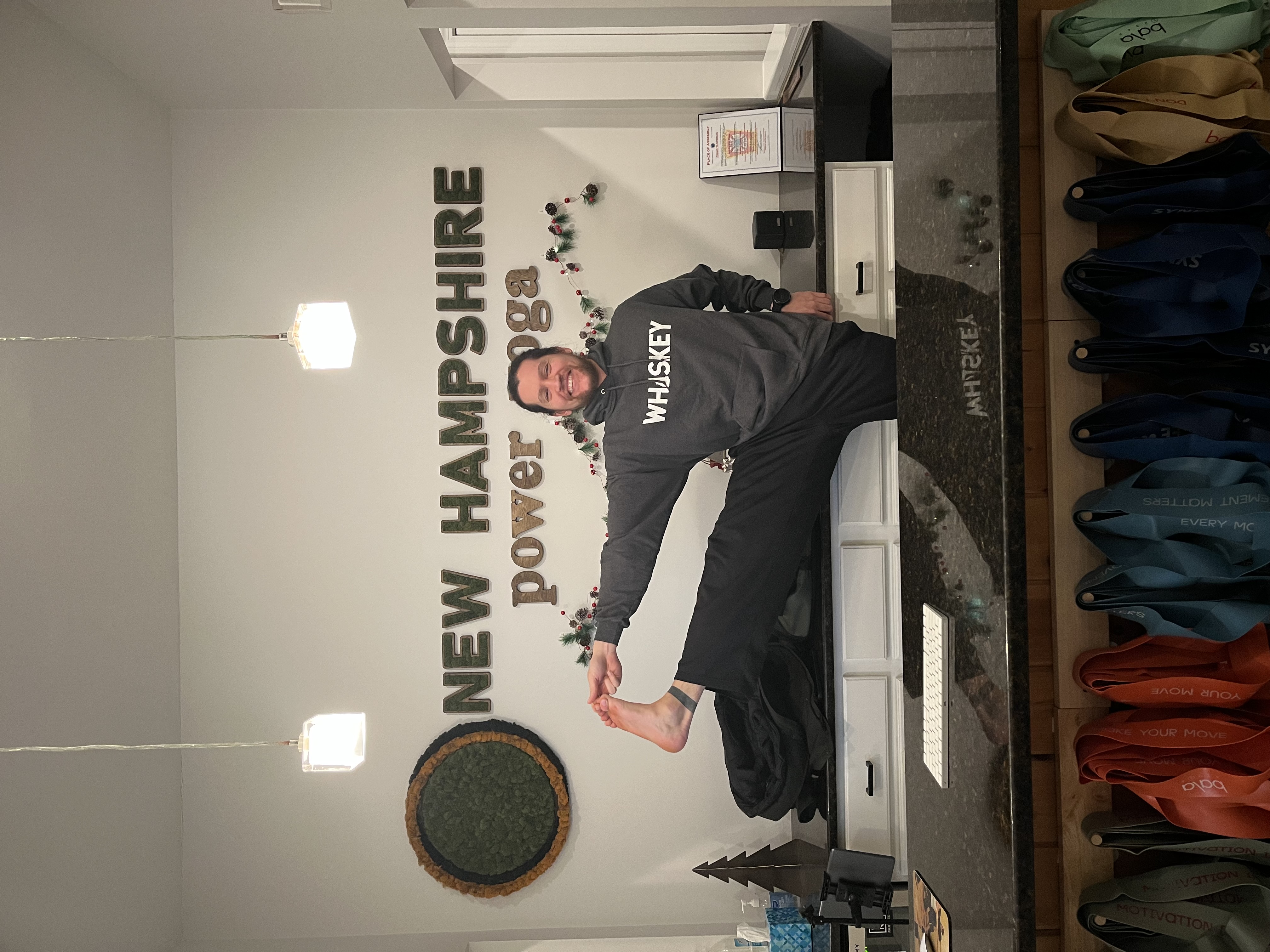
Tony's work sits across two worlds that initially seem very different. He works in aerospace quality and industrial-organisational psychology, but he is also a yoga teacher and spends a lot of time thinking about presence, self-awareness and the internal work underneath everything we do. His argument is that meaningful external work begins with meaningful internal work.
The more we talked, the more I kept coming back to one question.
What are we actually rushing toward?
We Need Finish Lines
I actually think humans need finite things.
We need cycles. A day finishes. A week finishes. A year finishes. A sporting season ends. A race has a finish line. A project gets completed. There is something deeply satisfying about reaching a point where you can say: that bit is done.
Then you get to pause, look back, work out what happened and begin again.
We have built so many of these finite cycles into the way we organise our lives. Some come from nature and some are entirely made up by us, but they give us markers. Beginnings and endings. Seasons. Chapters.
The problem is that work itself rarely behaves that way.
Tony talked about work as an infinite game. There are targets, deadlines and scoreboards everywhere, so it can feel finite, but the game never actually ends. You hit this month's target and next month begins. You finish the project and another appears. You reach the end of the financial year and, quite inconveniently, another financial year starts.
The strange part is that we have built hundreds of finite games inside something that never actually finishes.
That does not make the smaller finish lines meaningless. I think they are essential.
But we have to actually let them be finish lines.
If every ending is simply used as a launch pad into the next thing, we lose the moment of completion that the cycle was supposed to give us in the first place.
And we definitely cannot keep telling ourselves that we will enjoy life at the end of the game, because there is no end of the game.
The weekend is not the finish line for your life. December is not the finish line. Retirement certainly should not be the first point at which you finally give yourself permission to play.
That means we have to create smaller cycles inside the infinite one. Finish something. Mark it. Celebrate it. Rest. Then start again.
The Life We Keep Saving for Later
At one point in our conversation, I caught myself describing the kind of bargain we make with ourselves all the time.
If I do this, then I can rest. If I achieve that, then I can take the holiday. If I finish this first, then I can have the thing I want.
And eventually I just said, “Just eat the damn cake.”
I stand by it.
Obviously this is not an argument for abandoning responsibility every time something enjoyable appears. Sometimes we save. Sometimes we work hard. Sometimes we absolutely do need to finish the task before we go off and play.
But there is a difference between delaying gratification sometimes and constructing your whole life around deferred enjoyment.
Tony talked about the path many of us are handed: get the degree, get the job, get married, build security, keep going, retire, and then apparently you are free to play.
“I think society sells us on being comfortable all the way to retirement. And then we play again.”
He was clear that none of those things are bad. They are also optional, and we are allowed to detour.
That really resonates with me.
I do not want play, joy, travel, creativity or rest to be rewards I receive for successfully completing adulthood.
I want them woven through the middle of it.
Learning How to Arrive
There was another part of the conversation that felt almost annoyingly familiar.
I was talking about publishing my book and how difficult it had been to finally press send because I could still see the things I wanted to improve.
Tony compared that to manufacturing.
You can have 96% of something working and immediately focus on the 4% that did not.
That is useful when you are trying to improve a process. It is less useful when it becomes the way you experience your entire life.
I think this is what many high achievers do without even noticing.
We reach something we once wanted and immediately scan for what is missing.
The project is finished, but what is next? The book is published, but how is it selling? The event went well, but what could we improve? The team achieved the target, but where did we fall short?
There is value in learning. I never want to lose that. But there also has to be a moment where we let something land.
Otherwise every destination simply becomes the starting line for another race.
Maybe part of feeling more alive is learning how to arrive.
To notice that something happened. To let yourself be pleased about it. To recognise that the thing you are standing inside now might actually be something a previous version of you desperately wanted.
We do not need to eliminate achievement or stop moving forward. We need to get better at completing a cycle before immediately opening another one.
Even Flow Needs Recovery
Tony also described himself as a recovering “flow junkie.”
He has spent years learning how to access flow and has even structured parts of his day around it. But he also pointed out the danger.
“The problem with that is you need to recover. And that's where we see signs of burnout.”
Even something as positive as passion and deep engagement can become unsustainable if recovery disappears. I think that is an important distinction.
Burnout does not only happen because you hate what you are doing.
Sometimes it happens because you love it.
Because you care. Because you are good at it. Because you keep finding another interesting problem to solve. Because being engaged feels so much better than stopping that you do not notice how long you have been running.
I know that pattern well.
The things I enjoy can sometimes be the easiest things to overdo because I do not experience them as a burden until my body eventually decides it has had enough.
That is why stopping cannot only be something we do when we are exhausted. It needs to be part of the rhythm.
Everyone Has Their Own Beat
Tony is a drummer, and he thinks about people the way a drummer listens to a song. In his first book he turns the word into an acronym.
“A beat is a belief, an emotion, an action, and a thought.”
He calls the feeling between two people “vibrations of thoughts”, the sense you get when someone is speaking from a good place. When it lines up, he wants to jam with them. His brother has a name for it: jamming in the cosmic universe.
I love this, because I think we all know the feeling. You meet someone and something in you goes, yes, I want to jam with you. It is a vibe check. And when you are rushing, you miss it.
My Reflection
I do not want to stop achieving things.
I like ambition. I like challenges. I like making ideas real. I like that moment where something I did not know how to do becomes something I have actually done.
But I do not want achievement to become a treadmill where every finish line disappears underneath my feet the second I reach it.
I want to get better at noticing where I already am.
I want to celebrate things before replacing them with the next target. I want to leave room for the silly detours, the afternoon that achieves nothing, the trip that does not need to be earned, and yes, sometimes the cake.
Because I think there is a real risk in becoming so good at moving forward that you forget to ask whether forward is still where you want to go.
So the question I keep coming back to is bigger than what I am working towards.
What am I rushing toward, and do I actually want to get there this quickly?
Play of the Week
Notice the 96%
This week's Play of the Week builds on a practice Tony has done for years with his brother.
At the end of the day, write down three things you appreciated or did well.
They do not need to be impressive. It might be time with someone you love, something you finished, a conversation you enjoyed, a moment outside, or simply something that went better than expected.
Then share them with someone.
The other 4% still exists. This trains you to notice that the 96% happened too.
We spend a lot of time noticing what is unfinished.
This week, notice what already happened.
This article is part of Articles & Reflections from The Element of Play, Jodi Salmond's work exploring adult play, burnout recovery, playful leadership, self-connection and more human ways of living and leading.