I love achievement. I like having something to work towards. A project. A deadline. A challenge. A goal that gives me somewhere to point my energy.
I do not think there is anything wrong with that. But there is a strange thing that can happen when the goal starts taking up more space than the life around it. You stop doing the things that do not seem useful. You stop wandering. You stop making things badly. You stop taking the long way home. You stop calling people unless there is a reason. You start measuring your days by what moved forward and what got finished.
And slowly, without necessarily noticing it, the life you are building can become incredibly efficient and slightly less alive.
That was the part of my conversation with Jen Guyton that stayed with me.
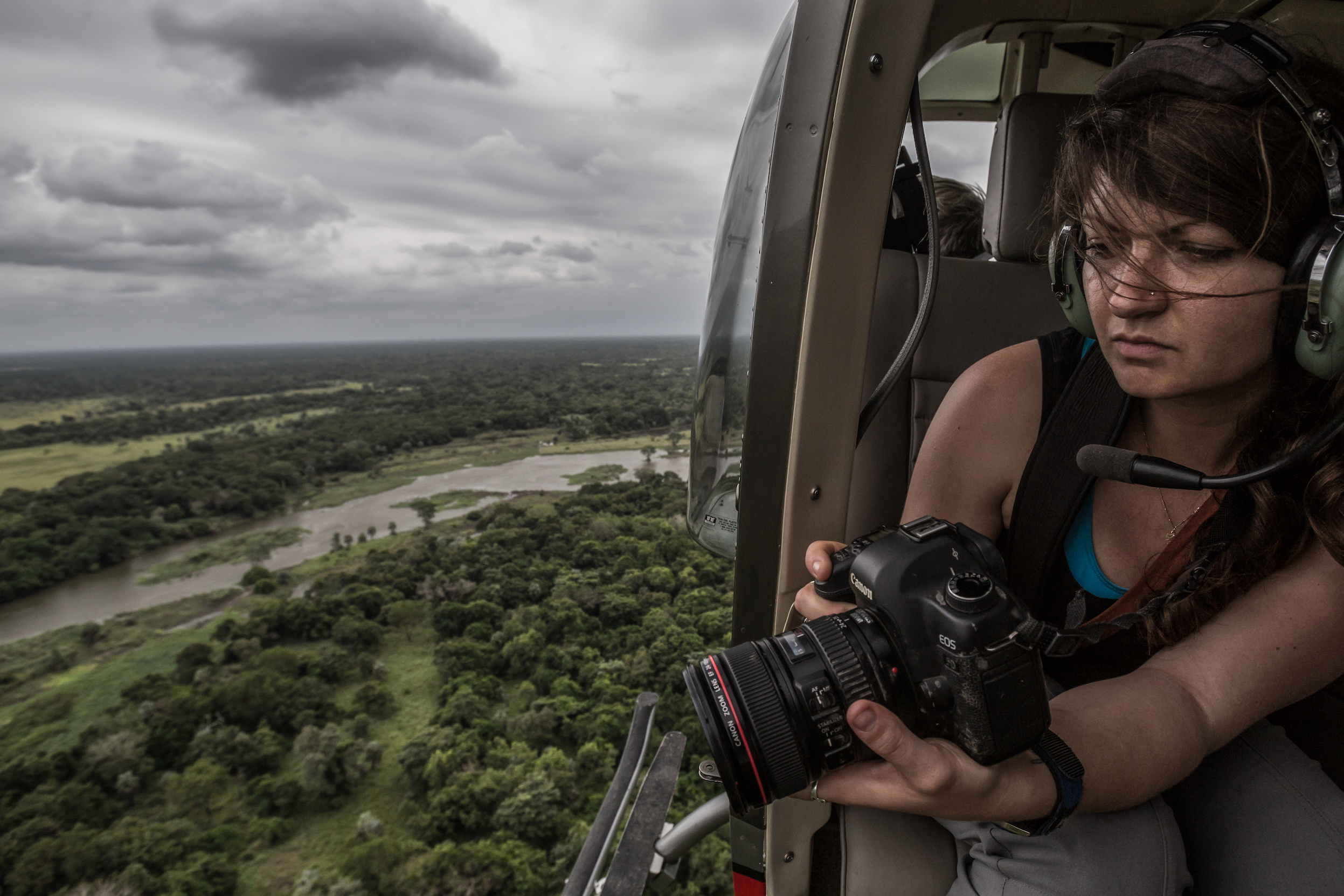
Jen had a childhood dream of having her work on the cover of National Geographic. She spent around 15 years working towards it with extraordinary focus. She built her photography career, worked in conservation, developed connections, earned grants, spent years in Mozambique and kept moving toward that one goal.
Then she got it.
Her spotted hyena work made the cover in 2024. She was excited for a couple of weeks, and then she went back to feeling anxious, wondering what she should achieve next, and realising she had quietly let go of many of the things that once made her feel like herself. Painting. Poetry. Creativity. Going somewhere simply because it sounded fun. Even her personal relationships had taken a back seat to the goal.
When the Goal Starts Taking Over
Jen calls this the achievement trap.
You achieve something, receive the validation, feel the hit of success, and then immediately raise the bar. What is next? What is bigger? What else can I prove?
The problem is not achievement itself. Achievement can be meaningful, exciting and genuinely useful. Awards can open doors. Goals can give us direction. Recognition can help careers, organisations and causes grow.
The problem is when achievement becomes the only place we know how to find value.
Jen described how easy it is to lose the ability to simply be when you have spent years constantly working toward something. We are taught that the job, the career, the relationship, the house, the accolade or the next milestone will finally make us happy.
Then we arrive and discover that happiness did not come packaged with it.
I think that is why I liked the image that came up during our conversation about mountains.
When I used to take students on international expeditions, there was always this urge to get to the top first. Keep moving. Reach the destination. And I would keep making them stop. Drink some water. Turn around. Look at where you actually are.
Because the journey was not just the summit. The entire thing was the journey.
Jen had almost the exact same experience hiking to Everest Base Camp. They spent days walking through extraordinary landscapes, staring at their feet and thinking about reaching the destination. Then they finally arrived and discovered Base Camp was essentially a giant rock with the words painted on it, surrounded by grey stone. They could not even see Everest.
On the way back down, they finally started looking around.
There is something almost painfully perfect about that. How much beauty do we walk past while concentrating on arriving?
Rewilding Yourself
Later in the conversation, Jen used a word I absolutely loved.
Rewilding.
In ecology, rewilding is about removing the pressures and barriers that have been placed on an ecosystem and giving nature the opportunity to restore itself.
Jen actually studied trophic rewilding during her PhD in Mozambique. She watched what happened when animals returned and pressures were removed. The system began finding its own balance again.
Now she uses the same idea with people.
Instead of constantly adding new routines, practices, goals and strategies, she thinks about stripping things away. Removing the parts that were never really yours. The expectations. The identities. The pressure. The version of success you inherited.
Then seeing what starts growing back.
That idea really appeals to me because most approaches to changing your life seem to involve adding something. Another morning routine. Another journal. Another productivity system. Another course. Another habit to maintain. Another bloody thing to become good at.
Jen said something later that I think gets right to the heart of it: sometimes we do not need more things, more structure or more practices. We need to learn to hear ourselves again and express our joy.
Maybe rewilding ourselves is less about becoming someone new and more about removing enough noise to notice who is still underneath it.
Let Yourself Be Bad at Something
One of the ways Jen started finding herself again was almost ridiculously simple.
She started doing things that had no strategic value. She walked on the beach because she wanted to. She played with her dog because he was silly and she loved him. She picked up the guitar she had owned for years and decided she was finally going to learn, without needing to become good at it.
She bought a skateboard. She and her partner now cruise around the neighbourhood, him on rollerblades and her on the board, simply because it is fun.
And Jen said something that I think a lot of high achievers find remarkably difficult: she let herself be bad at things.
I love that, because somewhere along the way, being a beginner can start feeling strangely uncomfortable.
If you are competent in one area of your life, you start expecting competence everywhere. You want to know how to do it. You want to look like you know what you are doing. You want evidence that the time you are spending on it is worthwhile.
But play does not ask for any of that.
You are allowed to be terrible at guitar. You are allowed to wobble on the skateboard. You are allowed to paint something ugly, dance badly, or do something for no better reason than you felt like it.
I think that is part of rewilding too. Letting parts of ourselves grow without immediately turning them into another performance metric.
Finding the Internal Spring
Jen used another metaphor I really liked.
She described ambition as a stream. Some streams are rain-fed. They flow when the rain comes and dry up when it disappears.
That is what external validation can feel like. You achieve something. Someone praises you. You win the award. You get the recognition. Energy rushes in.
Then it fades.
So you go looking for the next rainstorm.
But some streams are spring-fed. The source comes from underneath.
Jen described that as reconnecting with the passion and inspiration that made you care about something before anyone was watching.
The ambition does not disappear. It simply has a different source.
And sometimes, when you reconnect with that source, you discover your energy wants to flow somewhere completely different.
Jen still loves photography. But she has also discovered that a huge amount of her energy now wants to go into coaching and helping other people through the exact stretch she had to navigate herself.
She called what happened before "internal mission creep."
You start because you love wildlife or photography or science or writing or whatever the thing is. Then you realise it can earn you awards, praise, opportunities and status.
Slowly, you can start chasing those instead and lose touch with why you began.
That does not mean recognition is bad. It means it is worth occasionally checking where the water is coming from.
My Reflection
I do not want to stop achieving things. I like creating things. I like challenges. I like seeing an idea become real. I like having something ahead of me that I do not know how to do yet.
But I also do not want the things I achieve to become the only evidence that I am living well.
That feels like the difference.
Maybe the better measure is not always, what did I accomplish today?
Jen offered another one during our conversation:
How did I feel today?
That does not mean every day needs to be joyful or easy. Some days are hard. Some projects require effort. Sometimes the meaningful thing is uncomfortable.
But I do think there is value in noticing when the things that once made you feel alive have quietly disappeared from your life.
When did you stop painting? When did you stop singing? When did you stop walking somewhere just to see what was there? When did every hobby start needing to become productive? When did rest need to be justified? When did fun become something you were going to get back to later?
Rewilding yourself does not require burning your life down and starting again.
It might simply mean removing enough pressure for something that feels like you to grow back.
Play of the Week
Run an Experiment
Jen does not give her coaching clients homework. She gives them experiments.
I love that distinction because an experiment does not demand a particular result. It asks you to be curious.
So this week, do something purely because you want to. Not because it will improve your career. Not because it is good networking. Not because it looks impressive. Not because you can post it. Not because you are trying to get better at it.
Do it because some part of you went, that sounds fun.
Then notice all the stories your brain produces about why you should be doing something more useful instead. You do not need to argue with them. Notice them, and do the thing anyway.
Jen said play for her right now is doing things simply because she feels like doing them, without letting fear or self-doubt get in the way.
That sounds like a pretty good place to start.
This article is part of Articles & Reflections from The Element of Play, Jodi Salmond's work exploring adult play, burnout recovery, playful leadership, self-connection and more human ways of living and leading.