A conversation with photographer, dancer and self-described "unprofessional professional" Ayva Rose taught me that sometimes the wig gets you there faster than the pep talk does.
I've watched Ayva work a room from behind a camera for years before I ever saw her on a stage. She was the one crouched at the side of the room during our burlesque shows, catching the exact second someone's leg kicked past their ear or their face cracked into that specific kind of joy you only get mid-performance. What I did not know until we sat down for this episode was that watching from behind that lens was what eventually pulled her back onto the stage herself.
The Photographer Who Kept Watching From the Wings
Ayva started shooting dance when she was sixteen. She still photographs shows now, which means some weeks she is behind the camera and some weeks she is in costume performing herself.
It took her about five years of standing on the sidelines before she finally joined properly. She spent five years watching other women perform, feeling so much FOMO that it became emotional. I understood that feeling immediately. Burlesque making someone emotional might sound strange, but I think most of us have a version of that feeling. Watching someone else do the thing you used to do, or the thing you have always wanted to do, and feeling something crack open in you that has very little to do with sequins.
Ayva joined right before one of the company's big stadium shows. There was no gentle re-entry. Ayva went straight into the deep end after years away from performing. And one thing she said stayed with me: there is no feeling quite like being on stage with people who support and encourage you to do the exact same ridiculous, joyful thing you are doing.
What a Costume Actually Gives You
I asked Ayva something I think about often when I am getting into a stage outfit: what does putting on a costume let her become that she does not get to be in everyday life? Her answer was not really about sex appeal, even though burlesque carries that reputation. Her answer was really about confidence.
She talked about the difference between being sexualised and being a confident woman who happens to be wearing very little fabric, surrounded by other women who feel exactly the same way. That is the shift. You are not standing there feeling exposed. You are standing next to people who feel great, and that helps you feel great too. The whole room lifts together.
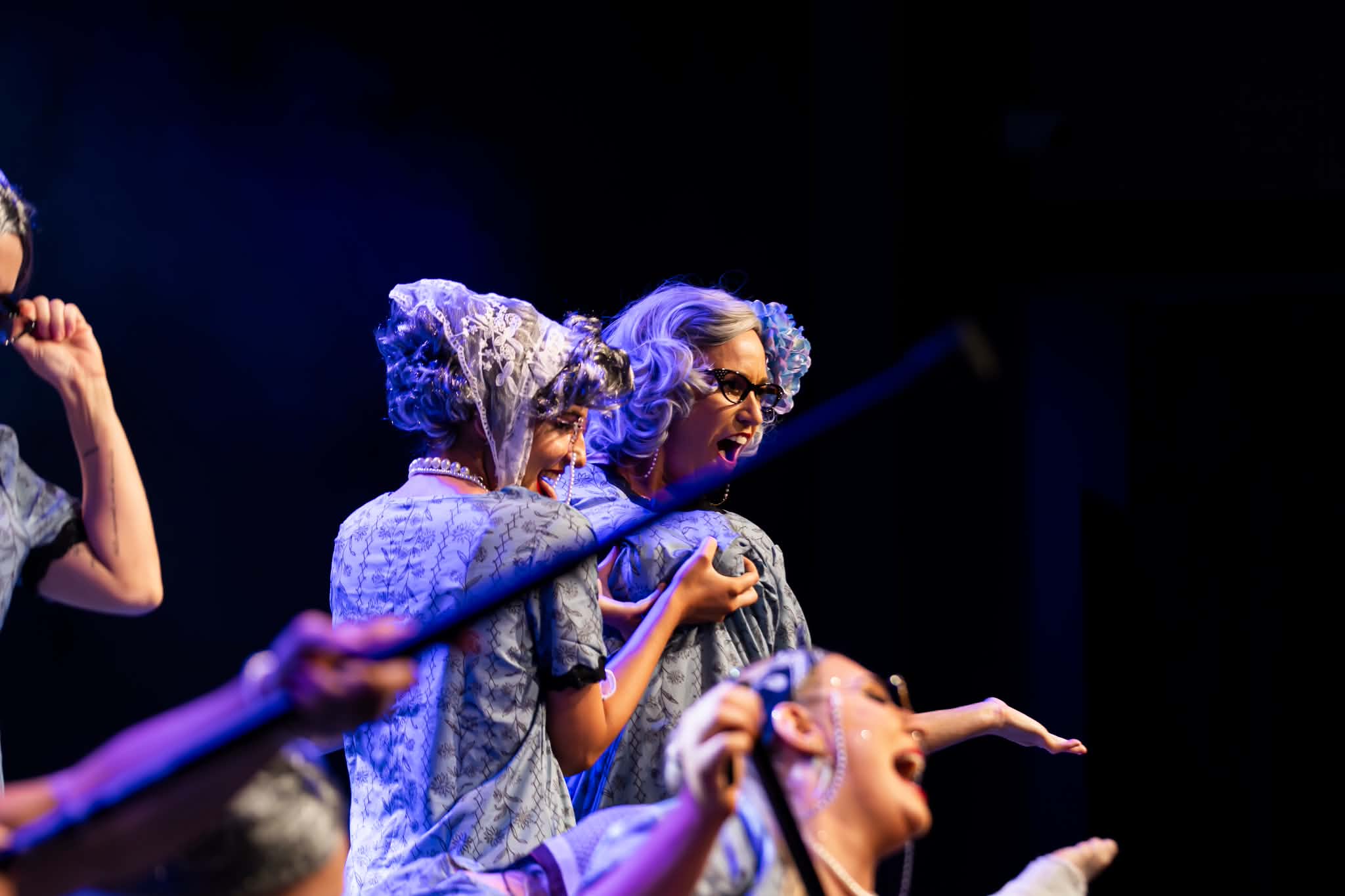
She also talked about a granny-themed number our group performed recently. The number involved wigs, floral robes and a full theatrical commitment to being about ninety years old for three minutes on stage. And weirdly, it is easier to express your inner grandma when you are already dressed as her. That was the bit that really landed for me. Ayva was clear that the costume is not a fake persona. The confidence, drama, silliness and theatricality already live in her. The costume just gives them permission to come all the way out.
A costume is not always a mask. Sometimes it does the opposite. A mask hides, while what Ayva is describing reveals more of the person who was already there.
The Unprofessional Professional
Off stage, Ayva runs Alora Media, working across photography, video, graphic design and content creation. She calls herself the "unprofessional professional." She calls herself that partly because she is Gen Z and has no interest in squeezing herself into corporate seriousness, and partly because she has learned that staying true to her actual personality is what attracts the right people.
She spent years in jobs where she had to wear black or wear a uniform. Now that she runs her own business, she wears the pink tracksuit and the rainbow whatever. And if somebody decides that is not professional enough for them, maybe they are simply not her client.
What is interesting is that the more she represented herself honestly, the more she started attracting exactly the people she wanted to work with. That is the throughline between the dancer, the photographer and the business owner. It is not three separate versions of Ayva. It is one person who has stopped editing herself down to fit the room.
The Science of Dressing Like Yourself
There is also something interesting about the way clothing affects how we feel. What we wear can shift how we carry ourselves, how confident we feel and how we show up in a room. Most of us have experienced this without needing a research paper to explain it.
There is an outfit you put on and instantly stand a little taller. There are clothes you wear when you want to disappear. There are things you reach for when you want to feel powerful, comfortable, playful, sexy, capable or completely yourself.
And I think we underestimate that. We can be very quick to dismiss clothes as superficial. But if putting on something colourful, theatrical, ridiculous or completely "you" changes the way you feel in your own body, that matters. Clothing matters because it can help you access something that was already there.
Permission Is Contagious
This is the part I keep coming back to. Ayva talked about what happens when a room full of women are all giving themselves permission to be seen. I know that feeling too.
You walk into dance after a long day feeling completely cooked. Then somebody tells you that you look amazing. Someone else nails something and everyone cheers. Someone forgets part of the routine and we laugh about the latest "solo." Someone appears in a wig that should probably never have been manufactured. And somehow you leave lighter than when you arrived.
I think confidence can work like that too. It is not always something we generate alone and then carry into the room. Sometimes it catches and passes from one person to the next. Someone else goes first, someone wears the ridiculous thing, someone dances badly and laughs, someone takes up space, or someone decides they are not going to tone themselves down today. And suddenly everybody else gets a little more permission too.
There are so many moments when we stop ourselves because something feels like too much. Something can feel too colourful, too loud, too silly, too dramatic, too visible. But I wonder what happens when we stop treating "too much" as automatically bad. Sometimes the doing comes before the feeling. Sometimes you do not wait until you feel brave. You put on the sequins and let the confidence catch up.
Play of the Week
Wear Something More You
This week, wear something a little more colourful, a little more expressive or simply a little more you than you normally would. This is not for anybody else. It is for you. It could be bright shoes, a pair of earrings, the shirt you keep deciding is "too much", or a colour you love but rarely wear. It might even be hidden underneath everything, where nobody else can see it. That is fine too. Notice how you feel in it, and notice whether you stand differently or feel a little more playful, confident or alive. You do not need a costume to become someone else. You may simply need a little permission to become more yourself.
This article is part of Articles & Reflections from The Element of Play, Jodi Salmond's work exploring adult play, burnout recovery, playful leadership, self-connection and more human ways of living and leading.